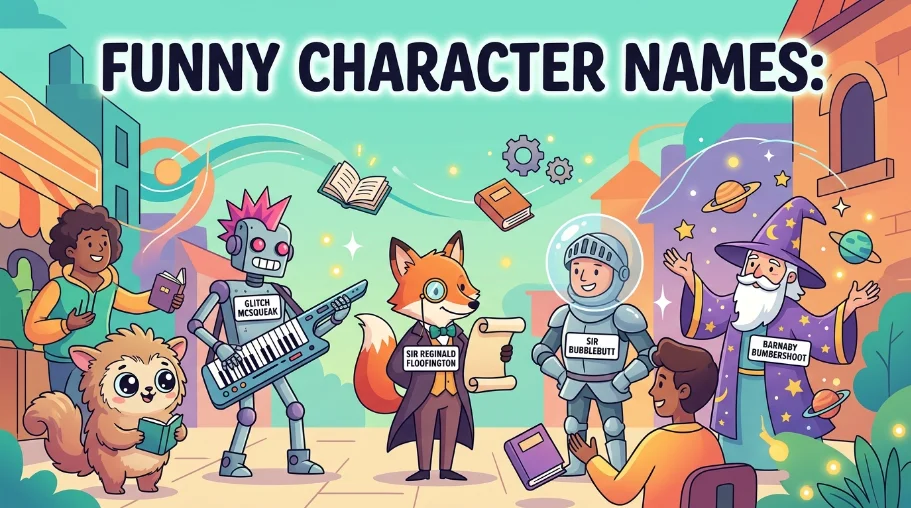
Quick Answer: Funny character names are clever, whimsical monikers like “Sir Loin of Beef,” “Penelope Picklepants,” or “Barry Bumblefoot” that inject humor and personality into fictional creations. These names often use puns, alliteration, and unexpected word combinations to make characters instantly memorable and entertaining for readers and audiences .
Introduction
Ever found yourself deep in the throes of creating something new—a story, a game, a comic, or maybe just a fun daydream—only to hit a brick wall when it comes to naming your quirky characters?
You’re definitely not alone.
Coming up with funny character names that stick and actually make people chuckle is an art form in itself. It can be nearly as stressful as naming a newborn baby! But when you hit on the right name, you’ll know it. Your favorite novels, movies, and games are filled with unforgettable characters whose names alone evoke memories of the great read. Think about names like “Pinkie Pie,” “Crime Master Gogo,” or “Dr. Ghunghroo”—each one instantly brings a smile to your face .
A funny character name can completely transform your creation. It can turn a serious villain into a comedic punchline, make a supporting character unforgettable, or set the tone for an entire story. Whether you’re writing a comedy, a light-hearted children’s book, or just want to inject some humor into your storytelling, the right name makes all the difference.
This guide covers everything from classic pun names to pop culture gems, complete with expert tips, common mistakes to avoid, and hundreds of creative ideas to spark your imagination.
Why Funny Character Names Matter
Creating Instant Memorable Impressions
Names are powerful. They provide limits and possibilities to what a character might be or do . A character that hasn’t been given the right name might even “misbehave” in your writing—Beatrice wouldn’t speak the same way Susan would, and Ernest would choose different clothes from Roderick .
Funny character names create immediate expectations. They tell your audience something about the character before they’ve even done anything. A name like “Mabel McSnort” suggests a boisterous, eccentric personality with a contagious laugh. “Barry Bumblefoot” paints a picture of a clumsy but lovable person .
Building Emotional Connections
Humor is a powerful tool for connecting with your audience. When readers laugh at a character’s name, they’re already forming a positive association. This can be especially valuable in children’s literature, where a silly name can make a young reader feel instantly comfortable and engaged.
As one writer noted, “Names are powerful—they provide limits and possibilities to what the character might be or do” . A funny name gives you a head start in building that connection.
Setting the Tone
The name you choose can set the tone for your entire story. A character named “Sparky Sparkeroni” suggests a completely different world than one named “Tempest Shadow,” even if they’re in the same universe . Your name choice signals to readers what kind of experience they’re in for.
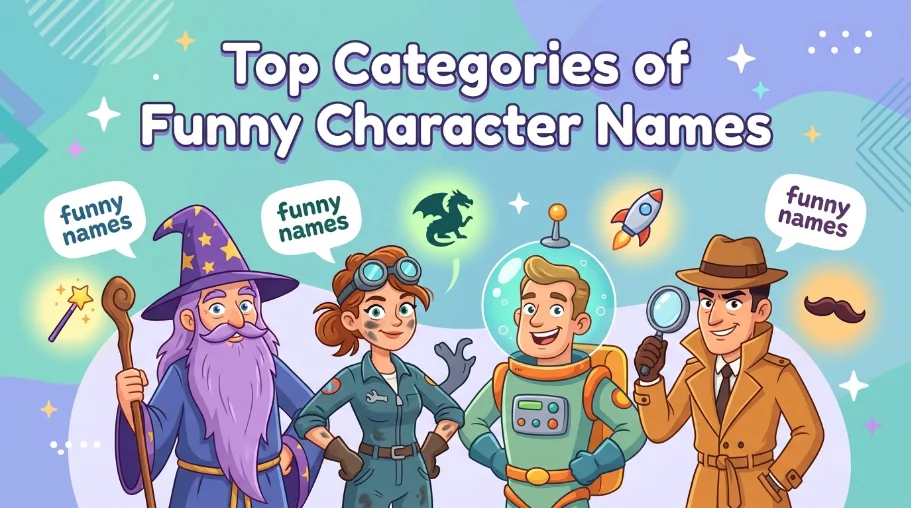
Top Categories of Funny Character Names
Puns and Wordplay Names
Puns are the bread and butter of funny character names. They showcase clever wordplay and often make people groan and laugh simultaneously. These names work because they play with language in unexpected ways.
Pun NameThe JokeSir Loin of BeefA knight who loves steak Claire VoyantA clairvoyant character Barry CadeSounds like “barricade” Ann ChovieA fish-themed character Earl Lee RiserSomeone who gets up early Hugo FurstA character who’s always first Barb E. CueA barbecue enthusiast Phil A. MignonA food critic with refined taste
Alliterative Names
Alliteration involves using the same letter or sound at the beginning of multiple words in a name. This technique makes a name catchy and fun to say .
- Bumbling Bob
- Wacky Wendy
- Quirky Quincy
- Greta Gigglesnort
- Penelope Picklepants
- Baxter Bunglesworth
- Mabel McSnort
Descriptive Physical Trait Names
Highlighting exaggerated physical traits in a character’s name can add a comedic element to their persona .
NameThe TraitTiny McBigginsA large character with a misleading name Curly LocksSomeone with curly hair Enormous EdnaAn exaggeratedly large character Tiny TimA small character Barry BumblefootA clumsy character
Unexpected Occupation Names
Giving your character a name that doesn’t match their profession creates comedic contrast .
- Dr. Gigglesworth – A serious surgeon with a silly name
- Officer Clumsy – A well-meaning but clumsy police officer
- Professor Whiskersnort – A distinguished academic with a ridiculous name
Exaggerated Personality Names
Use adjectives to emphasize exaggerated personality traits in your character’s name .
NamePersonalityGiggle-tastic GaryAlways laughingGrumpy GusPerpetually grumpyNervous NellieAlways anxiousZany ZeldaCompletely unpredictable
Cultural and Media-Inspired Names
Bollywood and other entertainment industries have given us some legendary funny character names that are instantly recognizable to fans.
NameSourceCrime-Master GogoAndaz Apna Apna—played by Shakti Kapoor CircuitMunna Bhai series—played by Arshad Warsi Chatur (The Silencer)3 Idiots—played by Omi Vaidya ChoochaFukrey series—played by Varun Sharma Dr. GhunghrooWelcome—played by Paresh Rawal
Animated and Children’s Character Names
These names are perfect for cartoons, children’s books, and games where silliness is encouraged.
NameSource or VibePinkie PieMy Little Pony—cute and silly Fizzlepop BerrytwistMy Little Pony character AlphabittleMy Little Pony—alpha + little Sparky SparkeroniMy Little Pony dragon Jazz HoovesPonyfied version of “Jazz Hands” meme JigglesA living jello cube from The Penguins of Madagascar
Fantasy and Sci-Fi Funny Names
Even in serious fantasy settings, funny names can add humor and personality.
NameWhy It’s FunnyOak BrambleheartA firbolg druid with a nature-themed name Reginald RumplestiltskinA dapper gnome with a magical name Penelope PopsicleAn ice cream enthusiast Barnaby BumblebumpA bumbling beekeeper
How to Create Your Own Funny Character Names
The Mix-and-Match Method
Take two unrelated words and combine them for unexpected humor. This technique consistently produces great results.
- Pick a descriptive word (silly, clumsy, grumpy)
- Add a body part or object (foot, nose, fingers, pants)
- Combine them → “Wafflefingers,” “Picklepants,” “Bumblefoot”
Real examples: “Waldo Wafflefingers,” “Penelope Picklepants,” “Barry Bumblefoot”
The Pun Approach
Start with a common phrase or saying and twist it into a name.
- Eileen Dover → “I lean over”
- Sir Osis of Liver → “Cirrhosis of the liver”
- Hugh Jass → “Huge ass” (from The Simpsons)
Character-Inspired Naming
Think about your character’s role, personality, or backstory. The name should reflect who they are.
Method 1 – Pick the Concept: Look for nouns or adjectives that suit the concept and try different combinations that sound like a name. For example, “Oak Brambleheart” could be a firbolg druid whose parents named all their children after their favorite trees, and “Brambleheart” could represent someone kind but shielded behind a wall of thorns because of trauma .
Method 2 – The Random Typing Method: Type randomly without looking at the keyboard, see what it gives you, and fill in blanks or swap stuff around wherever you see something that could sound good .
Example from the method: CGA KHAIGKBEFYUN XNVOPFWW PFYEBALSSJ → “Khaygon Xi’nevo” NAOF HANFJ IQQHRSDO PWHRLA GEEIF → “Quhara Foan”
The Game of Thrones Method
Slightly alter real names to create something unique but familiar .
- Eddard instead of Edward
- Rickon instead of Richard
- Benjen instead of Benjamin
The Alternate Language Method
Choose a word that describes your character, translate it into another language, and use that as inspiration .
Example: A mounted character was literally just called “horse” but translated a few times through Google Translate .
The Occupation Method
Many surnames were originally derived from occupations—Butcher, Baker, Smith. You can create fantasy versions by corrupting these words .
Example: Baker → Bakerson → Bokerson → Bockson
Create Your Own Naming Convention
As a worldbuilder, you can establish naming conventions in your world and follow them .
Example: If the word “Spron” means “child of” in your world:
- A person called Lokan has a child
- The child’s surname would be “Lokanspron”
- Shorten it to “Lokspron”
Expert Tips for Creating Memorable Names
Keep It Reader-Friendly
Be careful of names that are difficult to pronounce—unless it becomes part of the story. One expert suggests that if a character has a difficult name, having them tell another character, “Just call me [nickname],” can solve the problem .
Make Names Distinct
If you have multiple characters, make sure their names are distinct. If they all start with the same letter, readers can get confused. If you must break this rule, make sure first and last names are different enough to stand out .
Consider Meaning
Many baby name books and databases include etymologies and traditional meanings. The Matrix uses symbolic names—Smith is generic (the AI can become anyone), Neo means “new” (new to reality), and Morpheus is the god of dreams (pointing out that what’s thought to be reality is a dream) .
Anagram Example: The Harry Potter series uses “Tom Riddle Marvolo” rearranged to spell “I am Lord Voldemort” .
Make Them Fit
Your character’s name can hint at their personality. Stephen King named a weak, cowardly character Percy Wetmore in The Green Mile .
Also consider ethnicity and family names. You wouldn’t name a Greek character “Bubba Jackson” .
Think About the Parents
Remember—you, the author, are not the person who named this character. The character’s parents named them. Or their grandparent. Or sibling. Someone in their fictional world made that choice. When? How? Why? This can point you in a direction or give you understanding .
Use Nicknames
Assign your main characters nicknames that only their close friends and family use. Princess Gwendolyn may be “Gwen” or “Lyn” to her sister, for example .
Common Mistakes to Avoid
Being Too Generic
Names like “John Smith” or “Jane Doe” are forgettable. Even if you’re not going for maximum humor, choose something that stands out .
Making It Too Complicated
While obscure names can work, if no one can pronounce or remember it, the joke falls flat. One expert notes, “When you hit on the right name, you’ll know it” .
Ignoring the Character’s Vibe
A name should fit the character’s personality and role. “Sparky Sparkeroni” works for a silly dragon, but “Tempest Shadow” might be more appropriate for a serious villain .
Being Overly Offensive
While names like “Hugh Jass” and “Seymor Butz” are funny (and classic Simpsons jokes) , avoid crossing into offensive territory. The goal is laughter, not discomfort.
Overdoing Alliteration
While alliteration can be fun, too much of it can make names feel gimmicky. Use it sparingly for maximum effect.
Comparison Table: Name Categories and Best Uses
CategoryBest ForExamplesEffectivenessPunsQuick laughs, clever wordplaySir Loin of Beef, Claire Voyant, Barry CadeHigh laugh factorAlliterativeCatchy, memorable namesBumbling Bob, Penelope Picklepants, Baxter BunglesworthVery memorablePhysical TraitsComedic exaggerationTiny McBiggins, Enormous Edna, Barry BumblefootVisual humorUnexpected OccupationsCharacter contrastDr. Gigglesworth, Officer ClumsyGood for subversionCultural ReferencesRecognizable humorCrime-Master Gogo, Chatur, ChoochaFan connectionFantasy/Sci-FiWorldbuilding humorOak Brambleheart, Khaygon Xi’nevoGenre-specificChildren’s CharactersSilly, approachablePinkie Pie, Fizzlepop Berrytwist, Sparky SparkeroniKid-friendly
People Also Ask
What are the funniest character names of all time?
Some of the funniest character names come from pop culture: “Crime-Master Gogo” from Bollywood, “Hugh Jass” from The Simpsons, and “Pinkie Pie” from My Little Pony . Punny names like “Sir Loin of Beef” and “Barry Cade” are also universally funny .
How do you come up with a funny character name?
Start with your character’s concept or personality and look for words that fit. Use methods like the random typing method, alternate language translations, or corrupting existing words. The Game of Thrones method of slightly altering real names also works well .
Why are puns so effective for character names?
Puns are effective because they surprise readers with clever wordplay. They show creativity and make the name instantly memorable. Names like “Claire Voyant” (a clairvoyant) and “Earl Lee Riser” (someone who wakes up early) are classic examples .
What are good funny names for fantasy characters?
For fantasy settings, try nature-themed names like “Oak Brambleheart” or combine unexpected elements like “Reginald Rumplestiltskin.” You can also use the random typing method to create unique fantasy-sounding names like “Khaygon Xi’nevo” .
What makes a character name memorable?
A memorable name has a rhythm or “music” to it. It’s easy to pronounce and fits the character’s personality. Expert Jerry Jenkins suggests making names with “a little music to them” and using interesting spellings like “Jenkyns” instead of “Jenkins” .
Should I give my funny character a serious backstory?
Yes! Often the funniest characters have the most serious backstories—the contrast is what makes them funny. A character named “Dr. Gigglesworth” who is a brilliant but grumpy surgeon is more interesting than one who’s just silly all the time .
What are some funny names for a clumsy character?
“Barry Bumblefoot,” “Waldo Wafflefingers,” “Baxter Bunglesworth,” and “Officer Clumsy” are all excellent choices for clumsy characters . These names immediately convey the character’s nature while making people laugh.
Can I use a name generator for funny character names?
Yes, but use name generators as a source of inspiration rather than relying on them completely. Some generated names can be nonsensical. Combine suggestions from generators with your own creativity for the best results .
What’s the difference between a funny name and a silly name?
Funny names often have clever wordplay or cultural references, while silly names are just absurd. “Crime-Master Gogo” is funny because of the contrast between “Crime Master” and the silly “Gogo.” “Sparkle Cupcake” is silly because it’s just adorable and random .
Conclusion
Creating funny character names is one of the most enjoyable parts of storytelling. Whether you choose a clever pun like “Sir Loin of Beef,” a whimsical alliterative name like “Penelope Picklepants,” or a culturally-inspired gem like “Crime-Master Gogo,” the right name can bring your creation to life in ways you never expected.
Remember the expert advice: make your names reader-friendly, keep them distinct from other characters, and consider the meaning behind them . Most importantly, have fun with the process. The best funny names often come from a place of joy and creativity.
So grab your imagination, mix and match words, and give your characters names that will make your readers smile. Your audience will thank you, and your characters will thank you by coming to life on the page.
Ready to create your own funny character names?
- Try the random typing method for unique fantasy names
- Mix and match descriptive words with body parts
- Don’t be afraid to use cultural references
- Make sure the name fits the character’s role
- Most importantly—have fun with it!
